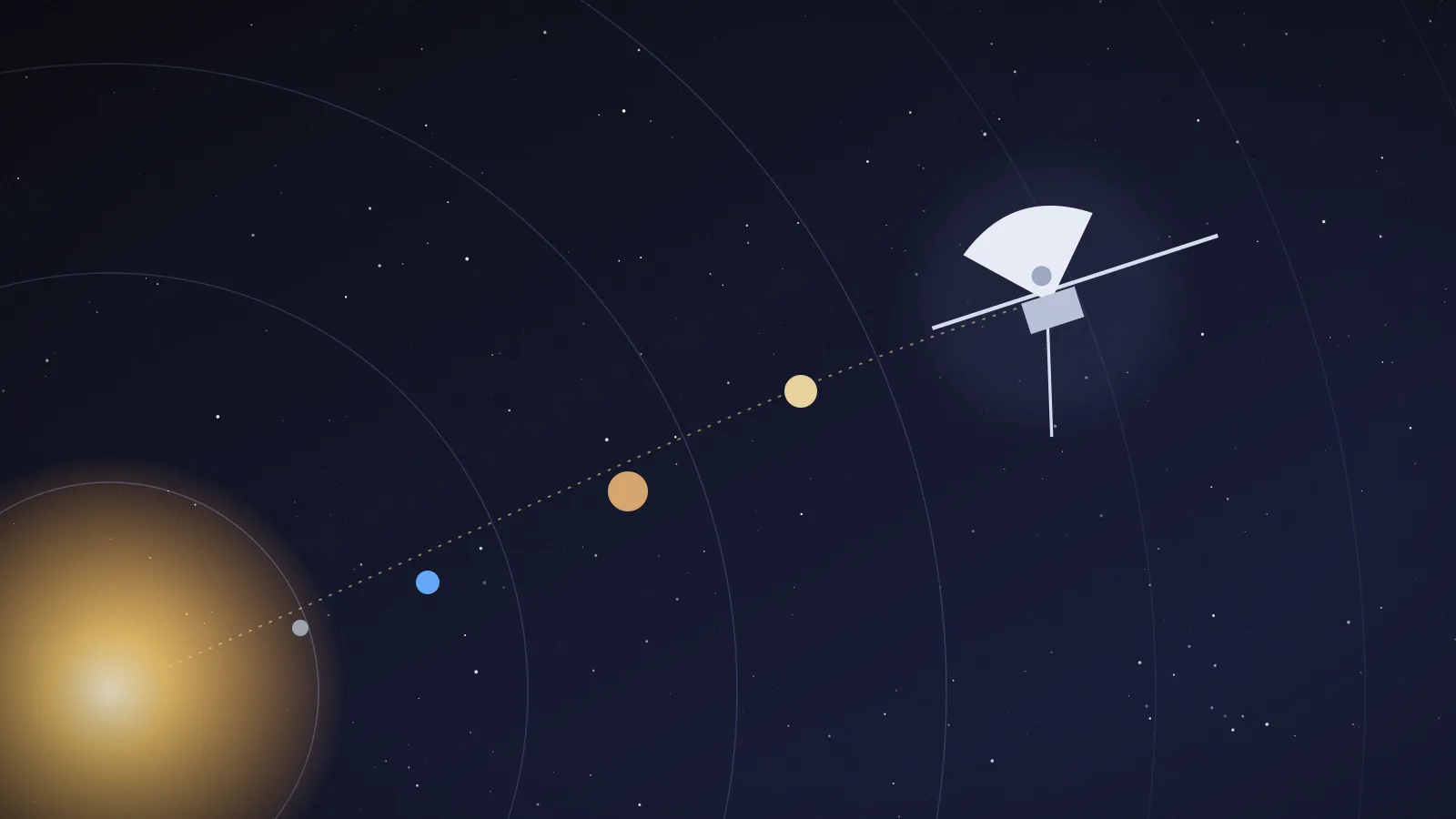
A spacecraft built in the 1970s, carrying less computing power than a modern car key, has just crossed a line no human-made object has crossed before. On 18 November 2026, NASA's Voyager 1 reached a distance of one light-day from Earth: so far away that a radio signal, travelling at the speed of light, now needs a full 24 hours to reach it.
Key takeaways
- Voyager 1 reached one light-day, about 16.09 billion miles (25.9 billion km), from Earth on 18 November 2026, according to NASA.
- Every command now takes roughly a day to arrive, and any reply takes another day to come back.
- Its twin, Voyager 2, will not reach the same distance until around November 2035.
- The probes are slowly running out of power, and engineers have been switching off instruments to keep them alive.
What is a light-day?
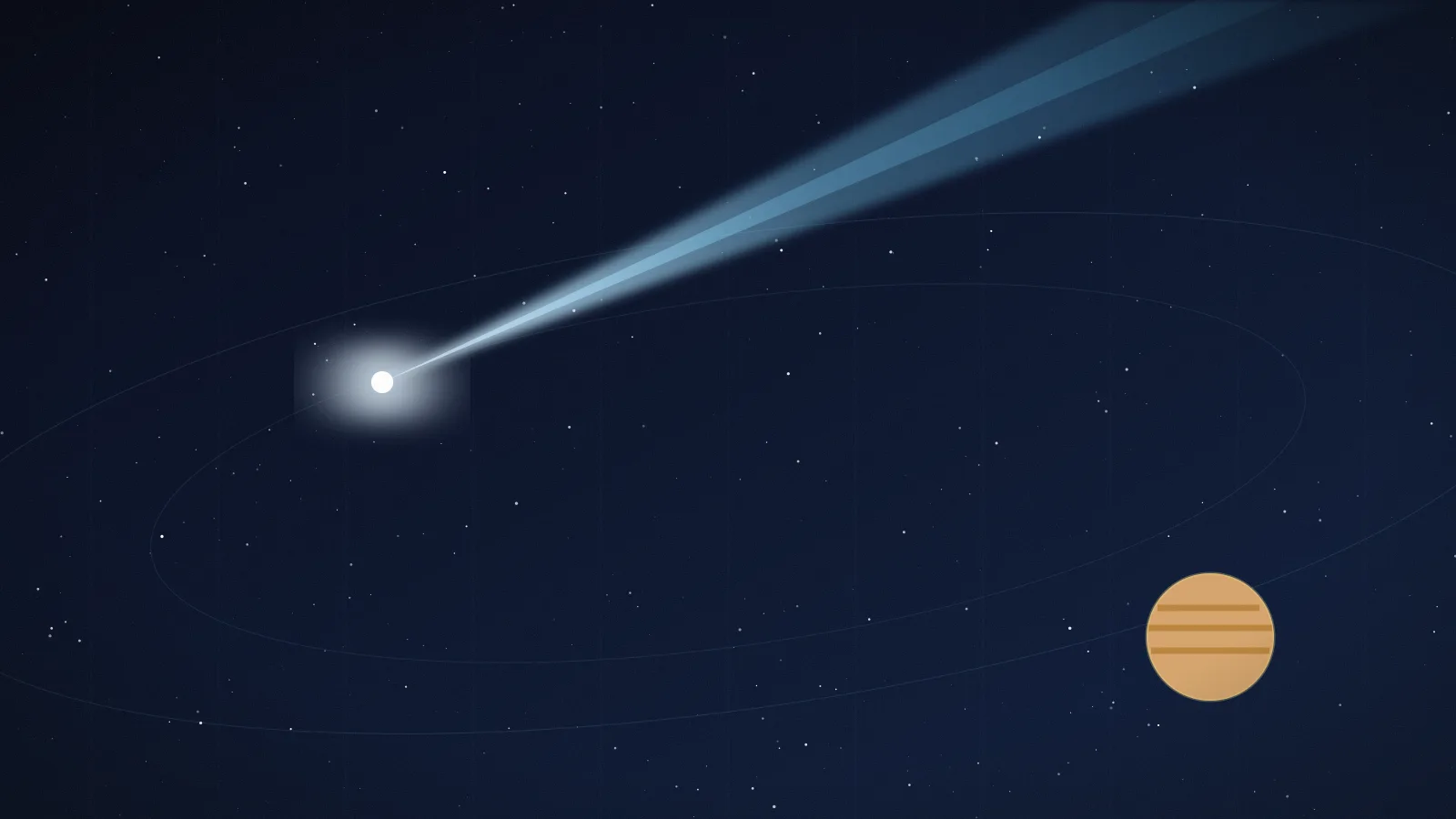
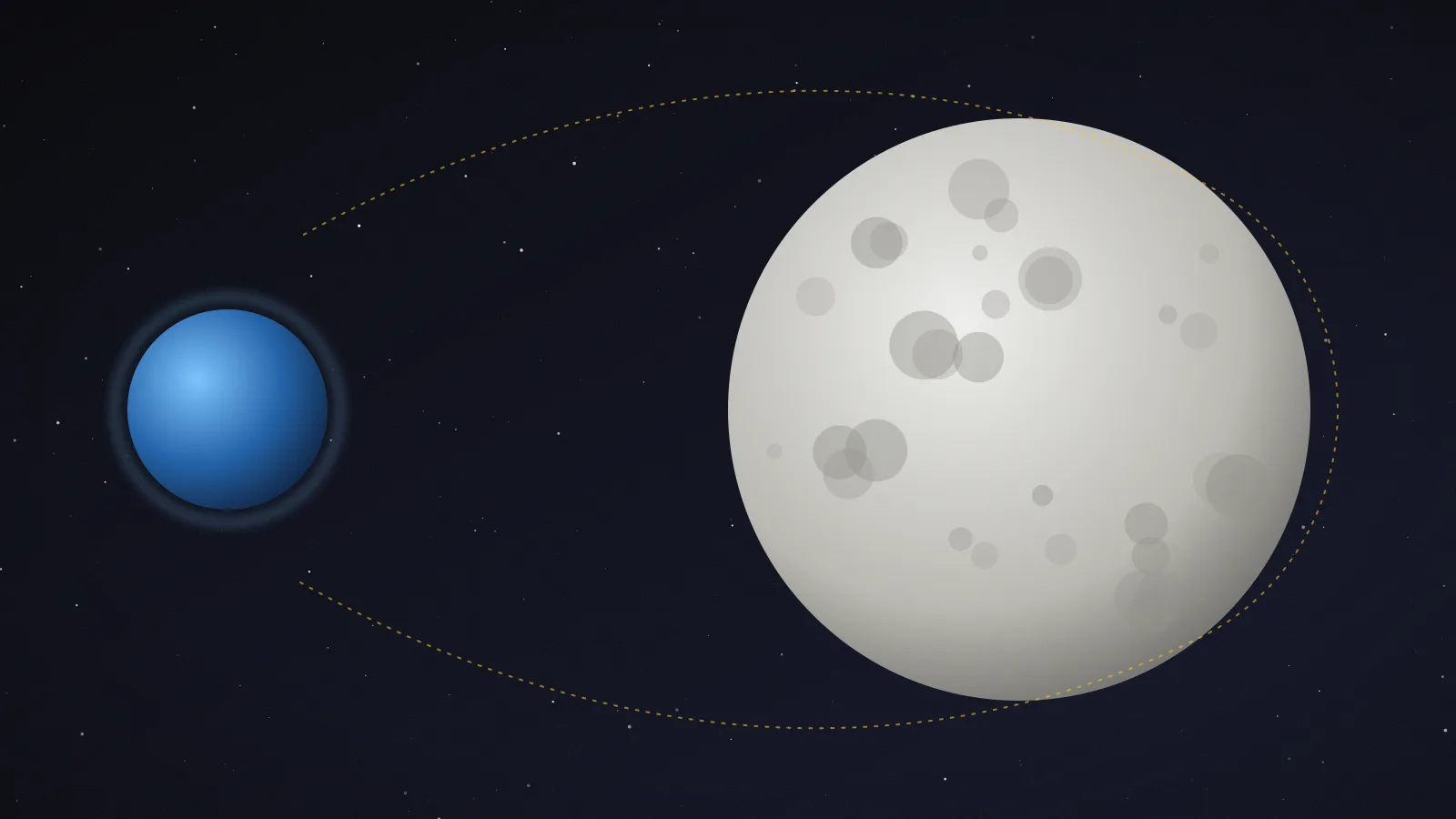
Astronomers measure huge distances by how long light takes to cross them. Light from the Moon reaches us in a little over a second. Sunlight takes about eight minutes and twenty seconds. A light-day is the distance light covers in 24 hours, which NASA puts at roughly 16.09 billion miles, or about 25.9 billion kilometres.
To picture it another way: if you could drive a car at motorway speed towards Voyager 1, you would need more than 20,000 years to get there. Yet in cosmic terms one light-day is tiny. The nearest star beyond the Sun, Proxima Centauri, is about 4.2 light-years away, which is more than 1,500 light-days.
How NASA knew the moment had arrived
Voyager 1 does not carry a sign that lights up at a particular distance. Engineers know where it is because they have tracked it continuously since launch, and they can predict its path with great precision. According to reporting on NASA's announcement, the team confirmed the milestone using the spacecraft's carrier signal, a steady radio tone that kept arriving even when no science data was being returned, together with flight-path calculations.
That signal is astonishingly faint. Voyager's transmitter puts out roughly the power of a refrigerator light bulb, and by the time it reaches Earth it is billions of times weaker than the power of a digital watch battery. Only the giant dishes of NASA's Deep Space Network, in California, Spain and Australia, can pick it up.
Nearly 50 years on the road
Voyager 1 launched from Cape Canaveral on 5 September 1977, a few weeks after its twin, Voyager 2. The pair were designed for a five-year mission to Jupiter and Saturn. Instead, they became the longest-running and most distant mission in NASA's history.
- 1979: Voyager 1 flew past Jupiter, revealing active volcanoes on its moon Io.
- 1980: It passed Saturn and its large moon Titan, then curved up and out of the plane of the planets.
- 1990: It turned its camera back to take the famous "Pale Blue Dot" image, showing Earth as a speck of light.
- 2012: It crossed the heliopause, the boundary where the Sun's wind gives way to the gas between the stars, becoming the first spacecraft in interstellar space.
- 2026: It reached one light-day from home.
Voyager 1 is travelling at about 17 kilometres per second relative to the Sun, or roughly 61,000 kilometres per hour. Even at that speed, it adds only a little more than half a billion kilometres to its distance each year.
Talking to a spacecraft a day away
A one-day signal delay changes how the mission is run. Engineers cannot react in real time. If they send a command on Monday morning, they will not know whether it worked until Wednesday morning. Every instruction must be checked carefully in advance, because a mistake could take days to notice and fix.
The team has done this under pressure before. In late 2023, Voyager 1 began sending back unreadable data because a memory chip in one of its computers had failed. Working from decades-old documents, engineers spent months diagnosing the fault and, in 2024, moved the affected code to other parts of the computer's memory. The spacecraft resumed sending science data. At one light-day, that kind of remote repair becomes even slower.
Every conversation with Voyager 1 is now a two-day round trip, across a distance no other machine has ever covered.
Running on fading power
Voyager 1 is powered by radioisotope thermoelectric generators, which turn heat from decaying plutonium-238 into electricity. As the plutonium decays, the power supply drops by about four watts every year. To keep the probe alive, engineers have been switching off heaters and instruments one at a time. In 2025, NASA turned off further science instruments on both Voyagers to stretch their remaining power.
The goal is to keep at least one instrument running on each spacecraft into the 2030s. Eventually, there will not be enough power to operate the transmitter, and Voyager 1 will fall silent. It will keep travelling, though. In about 40,000 years it will pass within roughly 1.6 light-years of a star called Gliese 445.
What Voyager 1 is still teaching us
Before the Voyagers, the edge of the Sun's influence was a matter of theory. The two probes have measured the density of the gas between the stars, the strength of the magnetic field outside the heliosphere, and the flood of high-energy cosmic rays that the Sun's bubble normally shields us from. Because Voyager 2 crossed the boundary at a different place in 2018, scientists can compare two direct samples of interstellar space.
There is also the Golden Record, a gold-plated copper disc on each spacecraft carrying sounds and images of Earth, greetings in 55 languages and music from many cultures. It was a message for any future finder. Today, it is also a reminder of how much the people who built Voyager achieved with 1970s technology.
What happens next
Voyager 1 will keep moving away from us at the same steady pace. Voyager 2, travelling a little slower and in a different direction, will reach its own one-light-day mark around 2035, if it is still operating. For now, each faint signal that arrives from Voyager 1 is a day-old postcard from the farthest point humanity has ever reached.
Sources
- NASA Science, Voyager 1: What is a light-day?
- NASA Scientific Visualization Studio, How Far Away Is Voyager 1? One Light-Day, Explained
- Space.com, 1 light-day from Earth! NASA's Voyager 1 probe hits huge milestone
- Popular Science, Voyager 1 is one light-day away from Earth, according to NASA estimate
- NASA Science, Voyager mission overview