If you only make time for one meteor shower a year, make it the Geminids. They are usually the richest shower of the year, their meteors are bright and slow enough to enjoy, and in 2026 the Moon is on your side. Here is everything you need to know to catch them on the night of 13 to 14 December.
Key takeaways
- Peak: the night of Sunday 13 to Monday 14 December 2026. The nights either side are also good.
- Moon: a thin waxing crescent (about a quarter lit) that sets early, leaving dark skies.
- Rate: under a truly dark sky, up to 100 or more meteors an hour at peak; far fewer from towns.
- Best time: from late evening onwards, with the highest rates after midnight local time.
- Active period: roughly 4 to 20 December.
When is the 2026 Geminid peak?
Forecasters agree that the shower peaks on 14 December 2026, but they differ on the exact hour. EarthSky gives a predicted maximum around 05:44 UTC on 14 December, while other estimates citing the International Meteor Organization place it later in the day. The Geminid peak is broad, so you do not need the exact hour. Plan to watch on the night of 13 to 14 December, and if clouds spoil it, try 12 to 13 or 14 to 15 December.
For readers in India, 05:44 UTC is 11:14 a.m. IST, in daylight. That simply means the best viewing will be in the dark hours just before, on the night of 13 to 14 December, with good rates also the following night.
How many meteors will I see?
Meteor rates you read about are usually ideal figures for a perfectly dark sky with the shower's radiant overhead. Real-world counts depend on where you are:
- Dark rural site: often 60 to 120 meteors an hour at peak, sometimes more.
- Suburban sky: perhaps 20 to 40 an hour.
- Bright city centre: only the brightest few, maybe a handful an hour.
Even a few bright Geminids can be memorable. They often look yellowish-white and leave short trails, and some are bright fireballs.
Where to look
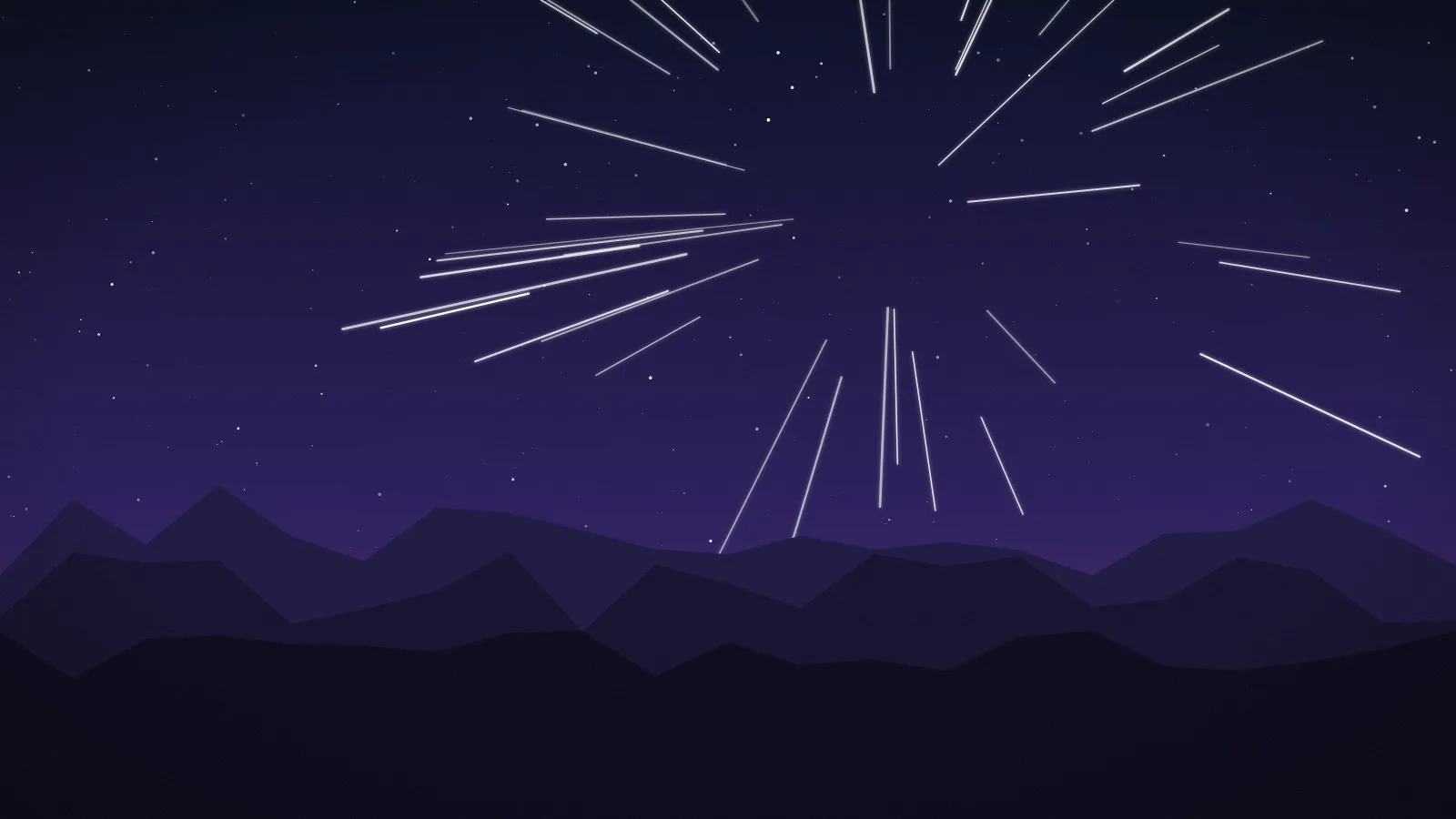
Geminid meteors appear to fly out from a point near the bright star Castor in the constellation Gemini. This point, called the radiant, rises in the north-east in the early evening and climbs high in the sky by around 2 a.m. local time. The higher the radiant, the more meteors you will see.
You do not need to stare at Gemini itself. Meteors can appear anywhere in the sky, and they often look longest about 40 to 60 degrees away from the radiant. Lie back, face roughly east or south-east, and take in as much sky as you can.
How to watch: a simple checklist
- Get away from lights. Even a short drive out of town makes a big difference.
- Give your eyes 20 to 30 minutes to adapt to the dark, and keep your phone screen off or on its dimmest red setting.
- Dress for winter. In the northern hemisphere December nights are cold. Bring a blanket, warm layers and a hot drink.
- Use a reclining chair or mat so you can look up comfortably for an hour or more.
- Be patient. Meteors come in clumps. A quiet ten minutes can be followed by several in quick succession.
No telescope or binoculars are needed. Their narrow view actually makes meteors harder to catch.
Photographing the Geminids
Put a camera on a tripod, use a wide-angle lens, focus manually on a bright star, and take continuous long exposures of 10 to 25 seconds at a high ISO. Most frames will show only stars, but over an hour or two you have a good chance of catching a bright meteor. Many modern phones with a night mode can also capture the brightest ones if held steady on a tripod.
Why the Geminids are unusual
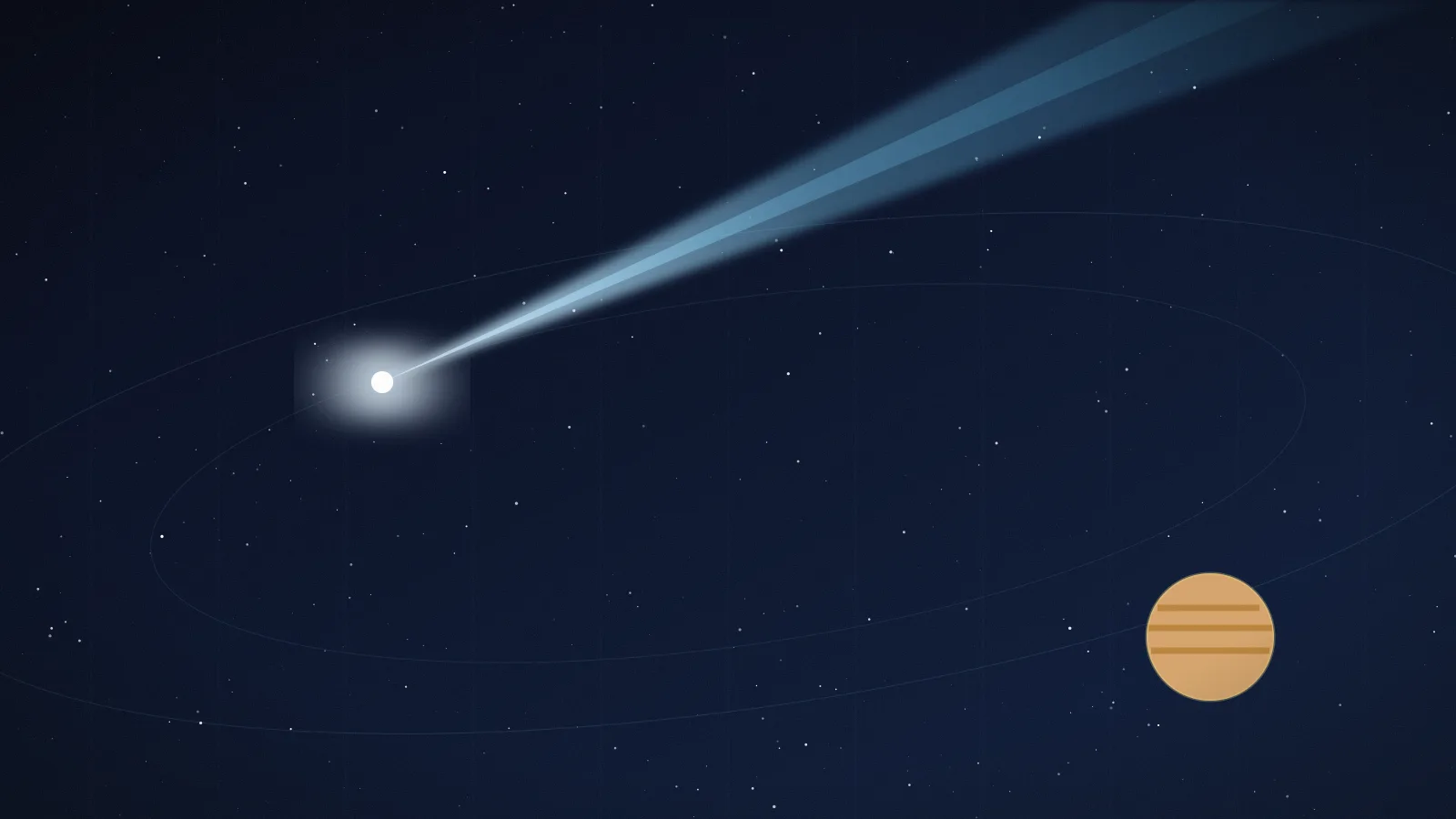
Most meteor showers come from comets, which shed dusty debris as they melt near the Sun. The Geminids are different. Their parent body is 3200 Phaethon, an object about 5 kilometres across that behaves more like a rocky asteroid. Phaethon passes extremely close to the Sun, and scientists think intense heating cracks its surface and releases the grit that becomes the Geminid stream.
Every December, Earth ploughs through this stream. Bits of rock, most no bigger than a grain of sand, hit our upper atmosphere at about 35 kilometres per second and burn up around 80 to 100 kilometres above the ground, creating the streaks we call shooting stars.
The Geminids come not from an icy comet but from a rocky object that is cooked and cracked each time it swings close to the Sun.
Southern hemisphere viewers
The Geminids favour the northern hemisphere, but they are visible from most of the world. From southern locations such as Australia, South Africa or southern South America, the radiant stays lower in the sky, so rates are lower. The best time there is in the hours around 2 a.m. local time, when Gemini is highest.
Other December sky events
- December solstice, 21 December: the longest night of the year in the northern hemisphere and the longest day in the southern hemisphere.
- Ursid meteor shower, around 21 to 22 December: a modest shower, usually around ten meteors an hour, best seen from the northern hemisphere.
- Full Cold Moon, 24 December.
Sources
- EarthSky, Everything you need to know: Geminid meteor shower
- Royal Museums Greenwich, Geminid meteor shower: dates and how to see it
- Farmers' Almanac, Geminid Meteor Shower 2026: Peak Date and Best Viewing
- NASA Science, Geminids
- International Meteor Organization, imo.net