For more than half a century, no human had travelled to the Moon. That changed in April 2026, when four astronauts rode NASA's Space Launch System rocket out of Earth orbit, looped around the far side of the Moon in the Orion spacecraft and returned home. Artemis II did not land, and it was never meant to. Its job was to prove that the rocket, the capsule and the people inside could make the journey safely. Here is what it achieved, and why it matters for everything that comes next.
Key takeaways
- Artemis II carried Reid Wiseman, Victor Glover, Christina Koch and Canadian astronaut Jeremy Hansen around the Moon on a roughly ten-day flight.
- Orion splashed down off the coast of California at 5:07 p.m. PDT on 10 April 2026, and all four crew were reported healthy.
- The capsule re-entered at about 24,660 mph (roughly 39,700 km/h), close to the record for a crewed spacecraft.
- NASA is studying the Orion heat shield's performance and has said it will correct any problems before Artemis III.
Who flew, and why the crew made history
Commander Reid Wiseman led a crew that set several firsts. Pilot Victor Glover became the first person of colour to travel to the Moon. Mission specialist Christina Koch, who already holds the record for the longest single spaceflight by a woman, became the first woman to fly to the Moon. Jeremy Hansen of the Canadian Space Agency became the first person from outside the United States to make the trip.
NASA described them as "record-setting moonfarers" when they returned, and their flight was the first time humans had left low Earth orbit since Apollo 17 in December 1972.
How the mission worked
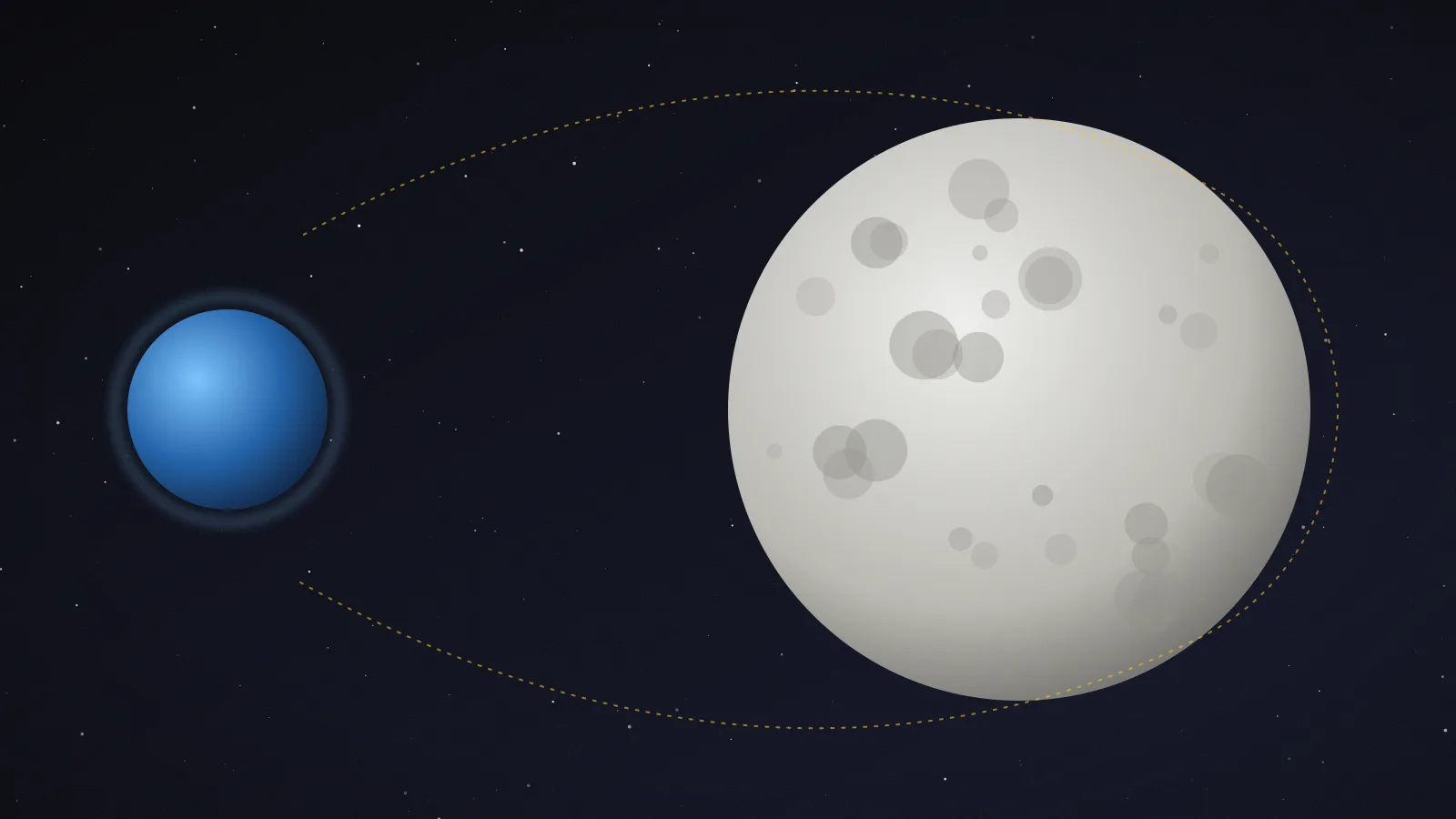
Artemis II followed what is called a free-return trajectory. After a period of system checks in a high orbit around Earth, Orion was sent towards the Moon on a path shaped so that the Moon's gravity would naturally swing it around and fling it back towards Earth, even if the main engine failed. This is the same safety principle that brought the crew of Apollo 13 home in 1970.
During the flight, the crew tested everything that future landing missions will depend on: life support, navigation, communications at lunar distance, the cabin's ability to handle the radiation environment beyond Earth's protective magnetic field, and the manual flying qualities of Orion.
The hardest part: coming home
Returning from the Moon is far more violent than returning from the International Space Station. Orion hit the atmosphere at about 24,660 mph, just short of the speed record for a crewed spacecraft, and its heat shield had to withstand temperatures of thousands of degrees. The capsule then slowed under its parachutes to about 19 mph before touching the Pacific Ocean.
Recovery also changed. Instead of hauling the capsule into a ship's flooded well deck before the crew climbed out, as was done with the uncrewed Artemis I capsule, teams carried out an open-water extraction, helping the astronauts out at sea.
The heat shield question
The heat shield has been the most closely watched part of Orion. After Artemis I, engineers found that chunks of the protective material had broken away in unexpected ways during re-entry. NASA studied the problem for many months and adjusted the re-entry path for Artemis II to reduce stress on the shield.
After splashdown, NASA released underwater images of the Artemis II heat shield and said its teams would identify a root cause for any issues and take corrective action before Artemis III. That careful post-flight review is exactly what a test flight is for.
Artemis II did not land, and it was never meant to. Its job was to prove the journey could be made safely, and to show engineers what still needs fixing.
What Artemis II proved
- The rocket works with people on board. NASA said the Space Launch System met all its objectives for the test flight.
- Orion can keep a crew alive for more than a week in deep space.
- Deep-space operations are possible with modern ground systems and an international crew.
- Recovery procedures work for a capsule returning at lunar speed.
What comes next
The next mission, Artemis III, is the step towards landing astronauts near the Moon's south pole, a region thought to hold water ice in permanently shadowed craters. That ice could one day provide drinking water, oxygen and even rocket fuel. A landing also depends on commercial lunar landers being developed by private companies, and on new spacesuits, so the schedule remains subject to change. NASA said after splashdown that it would soon announce the Artemis III crew.
The longer-term goal is a sustained human presence on and around the Moon, and lessons that can be carried on to Mars. The exact architecture of that programme, including lunar-orbit infrastructure, has shifted with NASA budgets and priorities, so check NASA's latest plans for current details.
Why it matters
For anyone under the age of about 55, Artemis II was the first time humans had travelled to the Moon in their lifetime. Beyond the symbolism, it showed that deep-space human flight is once again a working capability, not a historical memory. The engineering data from this flight, especially from the heat shield, will shape how safely the next astronauts get to the Moon and back.
Sources
- NASA, NASA welcomes record-setting Artemis II moonfarers back to Earth
- NASA, Artemis II Splashdown and Recovery gallery
- Live Science, Artemis II mission comes home after historic 10-day mission
- Caltech Science Exchange, Artemis II demonstrates new recovery operations for lunar missions
- Space.com, Splashdown! Artemis 2 astronauts return to Earth