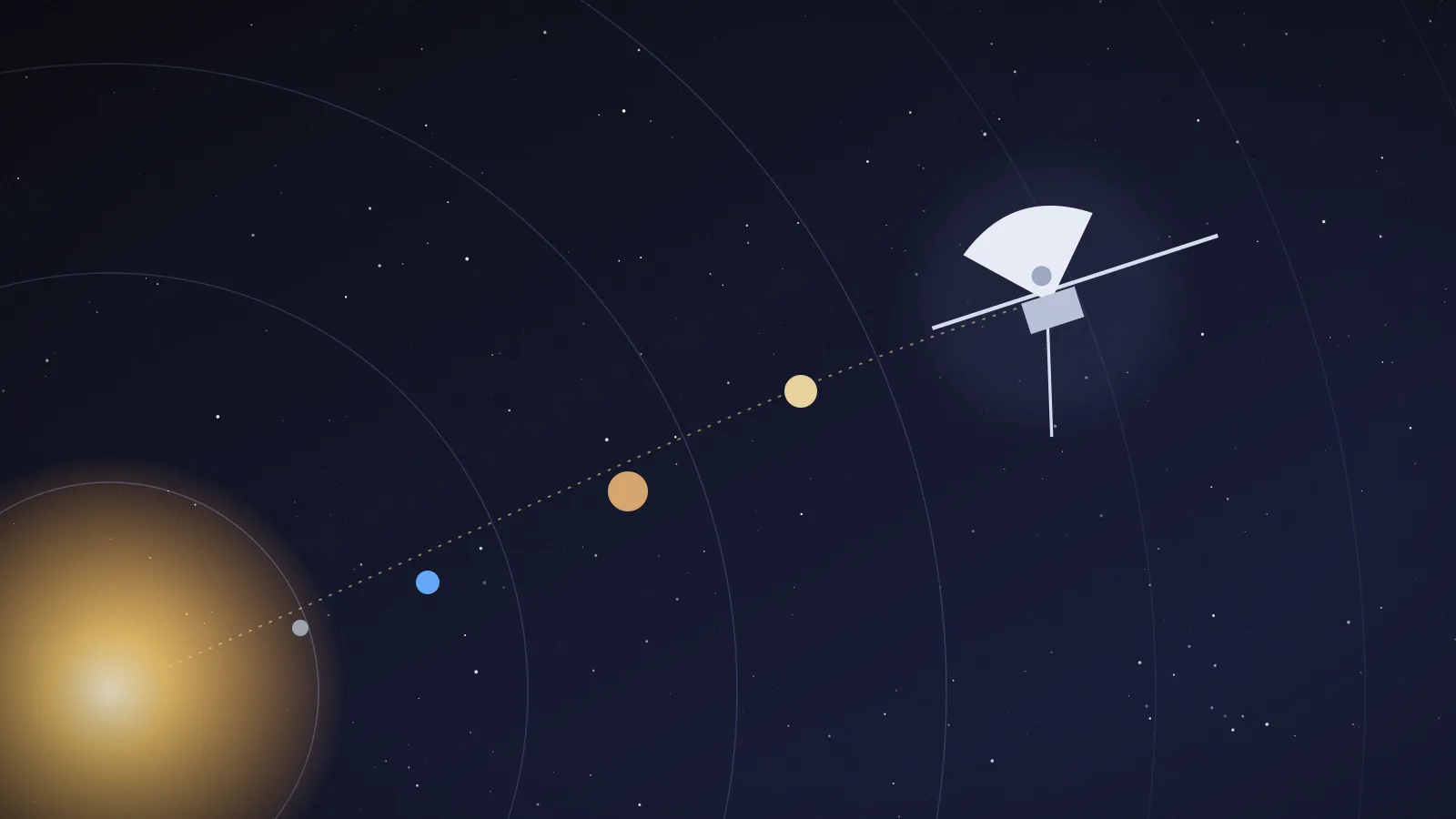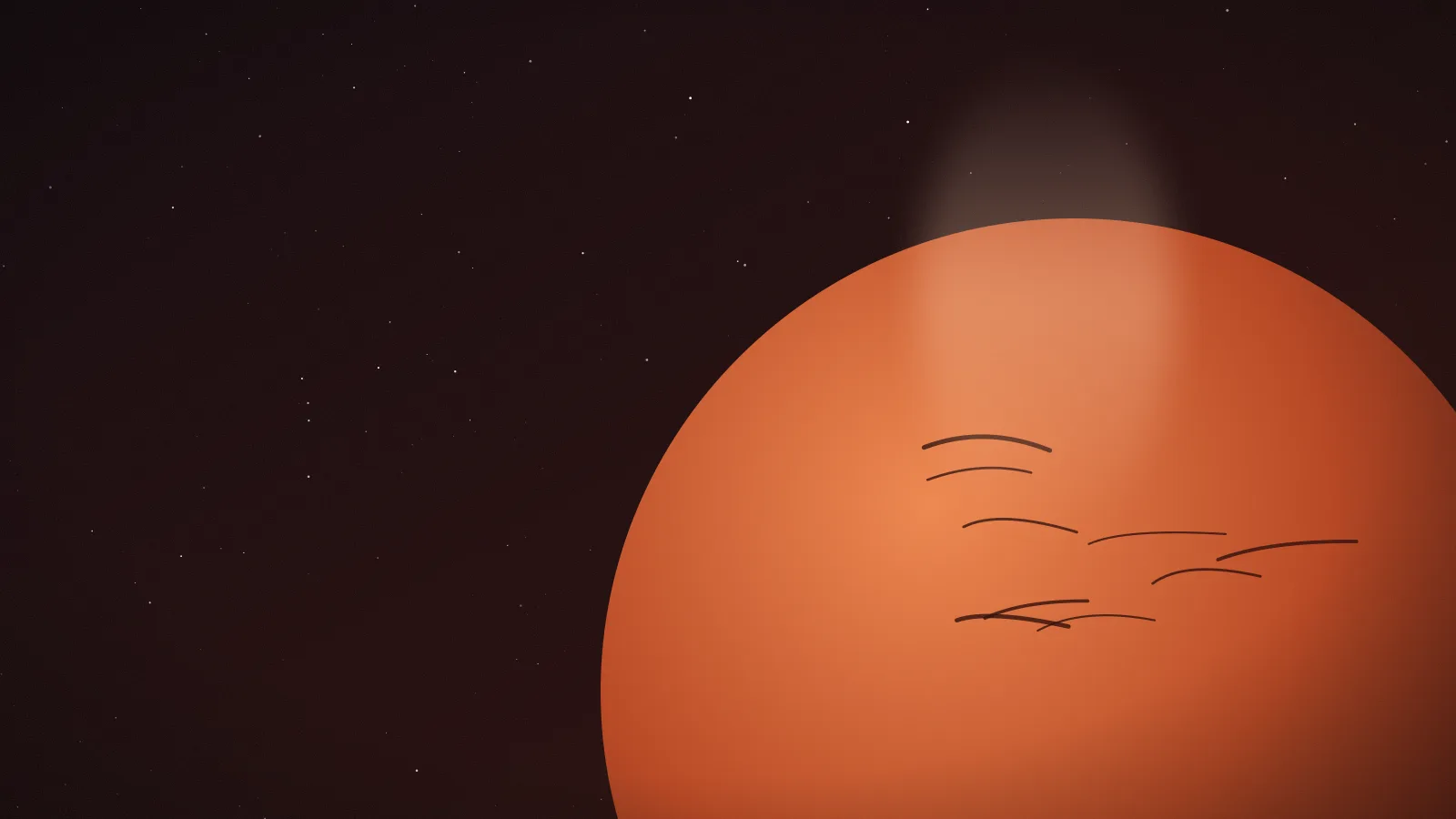
Mars is home to the largest volcanoes in the Solar System, but most scientists have long thought they fell silent long ago. A new study published on 4 November 2026 suggests the story may not be over. Year after year, a European spacecraft has detected an unusual gas, hydrogen chloride, appearing in the same place every early summer: directly above fresh-looking cracks on the flanks of a giant volcano called Alba Mons.
Key takeaways
- The ExoMars Trace Gas Orbiter repeatedly detected hydrogen chloride (HCl) gas above volcanic fissures on Alba Mons in early northern summer.
- Images show fresh, narrow fissures, some hundreds of metres long, and discoloured ground that resembles gas deposits around vents on Earth.
- The study, in Science Advances, suggests a possible underground volcanic source, but it does not prove Mars is erupting.
- No sulfur dioxide, a classic volcanic gas, was detected, and no lava flows have been seen.
A planet that was supposed to be dead
Mars is about half the width of Earth. Smaller planets lose their internal heat faster, and for decades the standard view was that Mars cooled enough to shut down major volcanic activity long ago. Its volcanoes are spectacular, Olympus Mons rises about three times higher than Mount Everest, but their surfaces are mostly ancient.
That view has been softening. Some lava flows in a region called Elysium Planitia appear to be geologically young, and NASA's InSight lander, which operated from 2018 to 2022, recorded hundreds of marsquakes, many of them coming from a set of fractures called Cerberus Fossae. Mars, it seems, is not entirely still.
The gas that shouldn't be there
The ExoMars Trace Gas Orbiter, a European and Russian spacecraft that arrived at Mars in 2016, was built to sniff the thin Martian atmosphere for rare gases. In 2021 its scientists reported the first detection of hydrogen chloride on Mars. At the time, most of the HCl seemed linked to dust storms, which can stir up salty surface dust that releases chlorine.
The new study, led by Alexander Trokhimovskiy with an international team, found an exception to that pattern. Always in the same season, early northern summer, and always in the same place, HCl appeared above the volcanic fissures on the flanks of Alba Mons. That repeatability is what caught the researchers' attention.
Fresh cracks and stained ground
The orbiter's CaSSIS camera photographed the area. The images show narrow fissures, some hundreds of metres long, that look fresh rather than worn down by billions of years of wind and dust. Around them, the ground is discoloured in a way that could come from gas deposits, similar to the mineral crusts that form around fumaroles, the steaming gas vents found on volcanoes on Earth.
On Earth, hydrogen chloride is one of the gases released by magma as it rises and loses pressure. If a pocket of warm material lies beneath Alba Mons, gas could seep slowly up through cracks without any eruption at the surface.
Why scientists are being careful
The researchers stress that their findings point to the possibility of activity, not proof. Several things are still missing:
- No sulfur dioxide. On Earth, active volcanoes almost always release sulfur dioxide. Its absence here is a puzzle and weakens the case for eruptive activity.
- No eruptions or lava. Nobody has seen fresh lava flows or explosive deposits on Alba Mons.
- Unknown depth. It is not clear how deep the source of the gas lies or how it connects to the surface.
- Other explanations. Seasonal heating of salty ground or ice could, in principle, release chlorine compounds without any magma involved.
If Mars still has warm pockets beneath its surface, it changes how we think about the planet's past, and about where we might look for signs of life.
Why it matters
A volcanically active Mars, even a weakly active one, would be a big deal. Heat beneath the surface could melt underground ice and create pockets of liquid water. On Earth, environments where warm rock meets water are home to thriving microbes. While there is no evidence of life on Mars, any place with heat, water and chemical energy becomes a more interesting target for future missions.
Active volcanism would also help explain how Mars has changed through time, how its atmosphere has been replenished and lost, and why some parts of its surface appear younger than expected.
What happens next
The Trace Gas Orbiter will keep watching Alba Mons each Martian summer to see whether the HCl returns, and whether any other volcanic gases appear. A clear detection of sulfur dioxide or a measurable change in the fissures would greatly strengthen the case. For now, the red planet has offered a tantalising hint that its long volcanic story may still be being written.
Sources
- National Geographic, Something weird is seeping out of Mars
- EurekAlert! (ESA release), Hydrogen chloride detected above Martian volcanic fissures
- Khaleej Times, Is Mars still volcanically active? Scientists discover new clues
- The Brighter Side of News, Hydrogen chloride gas found above Martian fissures
- European Space Agency, ExoMars programme