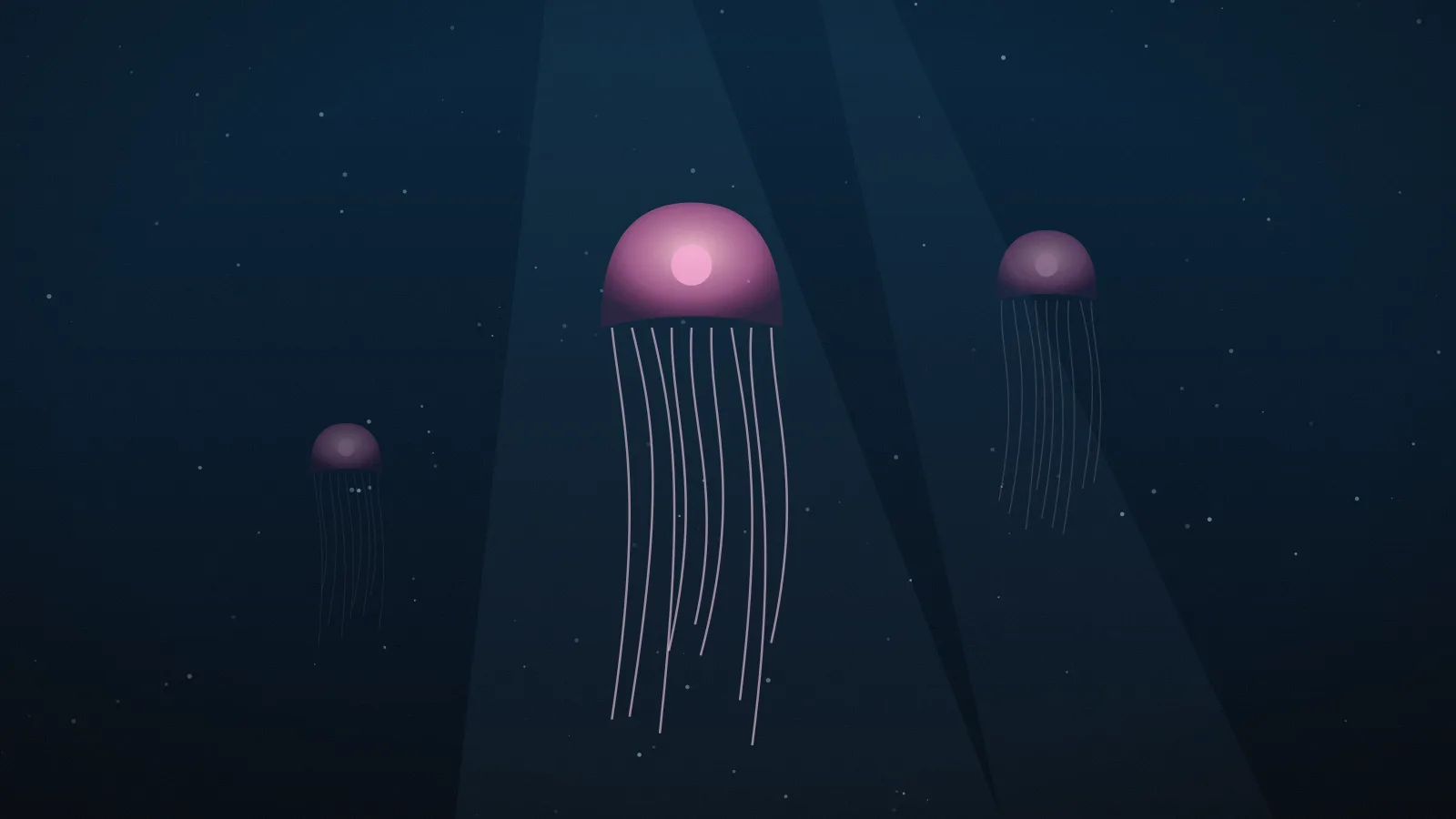
Imagine growing old, falling ill, and then, instead of dying, turning back into a baby and starting life all over again. For one tiny sea creature, that is not a fantasy. Turritopsis dohrnii, a jellyfish smaller than a fingernail, can reverse its life cycle when it is injured, stressed or ageing. It is the closest thing biology has found to an animal that can cheat death, and scientists have been studying it for clues about how ageing works.
Key takeaways
- Turritopsis dohrnii is a jellyfish about 4 to 5 millimetres across that lives in temperate and tropical seas.
- When stressed, an adult can revert to its juvenile polyp stage and grow up again, potentially repeatedly.
- It does this by transforming one type of specialised cell into another, a process called transdifferentiation.
- It is not truly immortal in the wild: most are eaten or die of disease.
A normal jellyfish life
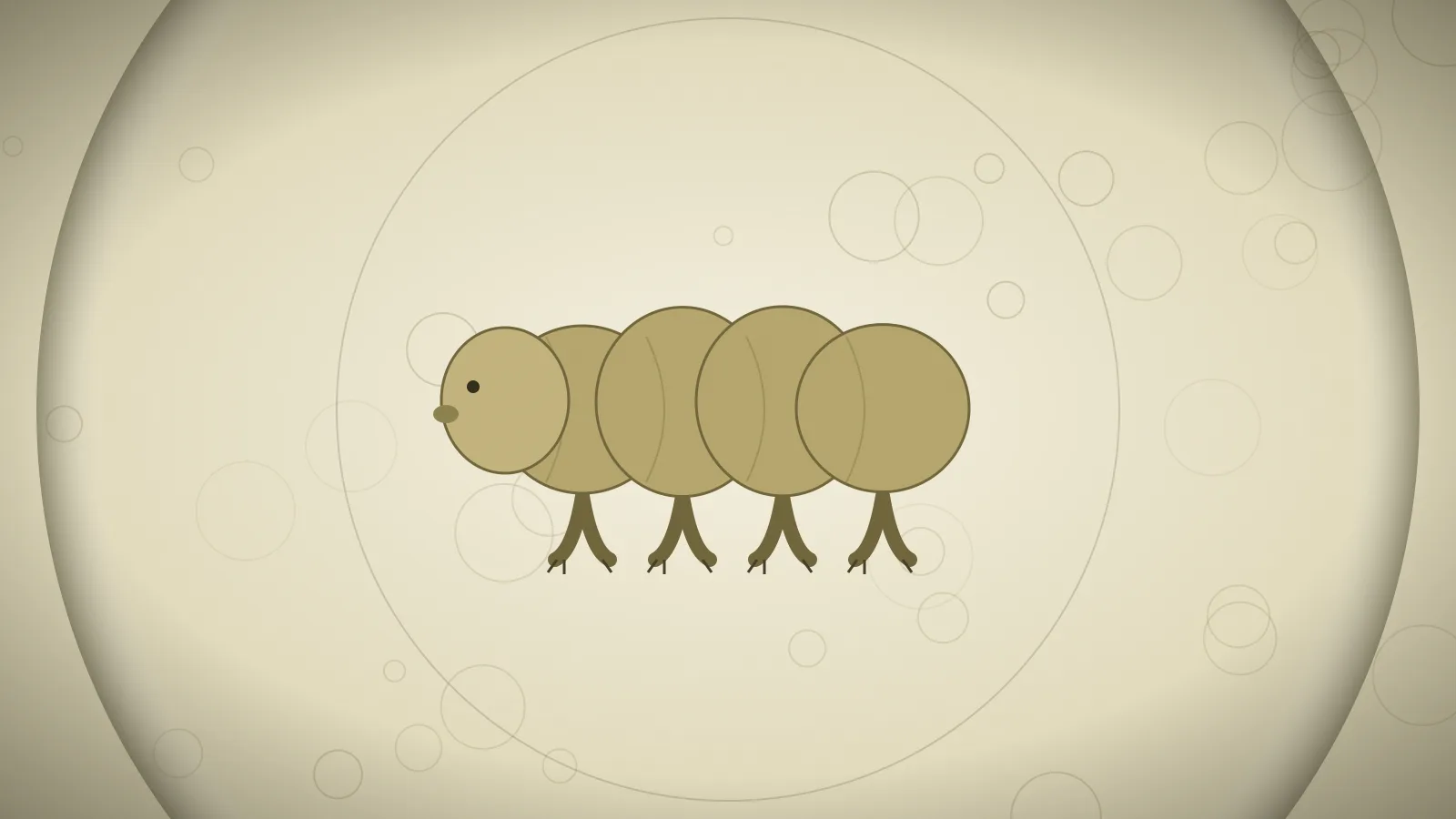
To appreciate the trick, it helps to know the usual jellyfish life cycle. Most jellyfish begin as a free-swimming larva called a planula. It settles on the seabed and grows into a polyp, a small stalk-like form that resembles a tiny sea anemone. Polyps form colonies and bud off young jellyfish, called medusae, which swim away, grow up, reproduce and eventually die. It is a one-way journey from young to old.
The reverse gear
Turritopsis dohrnii breaks this rule. When an adult medusa is damaged, starving, exposed to sudden temperature changes or simply old, it can sink to the seabed and shrink into a blob of tissue called a cyst. Over the following days, that blob reorganises itself into a polyp, the juvenile stage. The new polyp can then produce fresh medusae that are genetically identical to the original.
In the laboratory, the cycle can repeat again and again. In principle, there is no built-in limit, which is why the species earned the nickname "immortal jellyfish".
How it works: transdifferentiation
The secret lies in a process called transdifferentiation, in which one type of mature, specialised cell turns directly into another type. A muscle cell in the jellyfish's bell, for example, can become a nerve cell or a reproductive cell in the new polyp.
Humans have very limited versions of this ability. Most of our cells are locked into their roles once they mature. That is one reason why we cannot regrow a limb and why our tissues wear out with age.
In 2022, researchers in Spain published the genome of Turritopsis dohrnii in the journal PNAS, comparing it with a close relative that cannot reverse its life cycle. They found that the immortal jellyfish has extra copies of genes involved in DNA repair and protection, as well as differences in genes that help maintain telomeres, the protective caps on the ends of chromosomes that shorten with age in many animals.
The immortal jellyfish does not stop the clock. It rewinds it, then lets it run again.
So can it really live forever?
Not in practice. In the open ocean, these jellyfish are tiny, soft and defenceless. Most are eaten by fish and other predators or killed by disease long before they need to reverse their life cycle. "Biologically immortal" means that ageing does not inevitably kill them, not that they cannot die.
It also raises a philosophical question. If an old jellyfish turns into a polyp that then buds off many new jellyfish, are they the same individual? They share the same DNA, a little like clones, but they are physically new animals.
Other champions of long life
- Greenland shark: A 2016 study in Science estimated that these slow-moving Arctic sharks can live for at least 272 years and possibly far longer, making them the longest-lived vertebrates known.
- Hydra: These tiny freshwater relatives of jellyfish constantly renew their bodies from stem cells and show little sign of ageing in the laboratory.
- Ocean quahog clam: One clam, nicknamed Ming, was found to be 507 years old.
- Glass sponges: Some deep-sea sponges are estimated to live for thousands of years.
What it could teach us about ageing
No one expects to make humans immortal by studying jellyfish. But understanding how Turritopsis dohrnii resets its cells could help scientists learn more about regeneration and age-related disease. Researchers are already exploring ways to "reprogramme" human cells into younger states in the lab, a field known as cellular reprogramming. The tiny jellyfish shows that, at least in some animals, the march of time is not a one-way street.
Sources
- Pascual-Torner et al., PNAS (2022), Comparative genomics of mortal and immortal cnidarians unveils novel keys behind rejuvenation
- Nielsen et al., Science (2016), Eye lens radiocarbon reveals centuries of longevity in the Greenland shark
- Wikipedia, Turritopsis dohrnii
- Smithsonian Ocean, Jellyfish and comb jellies