Do Elephants Really Never Forget? The Science of Elephant Memory
The phrase "an elephant never forgets" is more than just a saying—it reflects a scientifically proven reality. Elephants possess one of the most sophisticated memory systems in the animal kingdom, rivaling and sometimes exceeding human capabilities in specific domains.
The Elephant Brain: Built for Memory
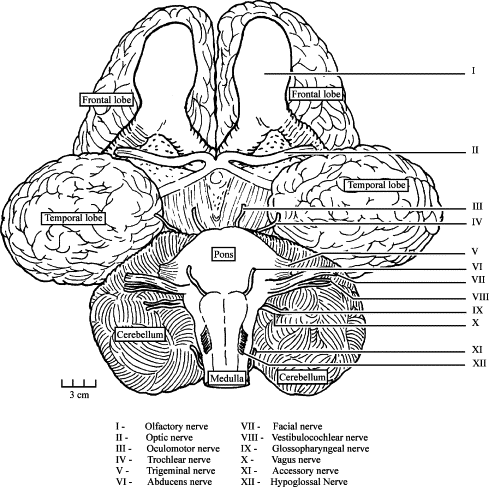
An adult elephant's brain weighs approximately 5 kilograms (11 pounds), making it the largest brain of any land animal. While size alone doesn't determine intelligence, the elephant brain has a highly developed hippocampus—the region responsible for memory formation and spatial navigation—larger in proportion than most mammals, including humans.
The elephant cerebral cortex contains as many neurons as the human brain, with particularly dense concentrations in areas associated with:
- Long-term memory storage
- Spatial mapping and navigation
- Social recognition and bonding
- Emotional processing
Social Memory: Recognizing Faces Across Decades
One of the most remarkable demonstrations of elephant memory comes from studies of social recognition. Elephants can identify and remember up to 200 individual elephants throughout their lifetime—even after decades of separation.
In a groundbreaking 1999 study published in Animal Behaviour, researchers played recordings of long-deceased matriarchs to elephant families. Elephants showed strong recognition responses to recordings made 12-23 years earlier, demonstrating that vocal memory persists across decades.
The Role of Matriarchs
Elderly female elephants—matriarchs—serve as living libraries for their families. Their accumulated knowledge about:
- Water sources during droughts (some learned 50+ years prior)
- Seasonal migration routes spanning hundreds of kilometers
- Dangerous areas and historical threats
- Social relationships with neighboring groups
Studies in Amboseli National Park, Kenya, showed that families led by older matriarchs (45+ years) had significantly higher survival rates during droughts compared to families with younger leaders. The matriarchs remembered distant water sources from droughts that occurred decades earlier.
Spatial Memory and Navigation
Elephants create and maintain detailed mental maps of vast territories, sometimes covering over 3,000 square kilometers. This spatial memory enables them to navigate directly to resources that may be hundreds of kilometers away.
Researchers tracking GPS-collared elephants in Namibia found that during a severe drought in 2019, elephants traveled directly—without exploration or trial-and-error—to water sources they hadn't visited in over 30 years. This demonstrates not just memory storage but the ability to retrieve and act on decades-old spatial information.

Remembering Friends and Foes
Elephants maintain complex social memories that extend beyond their immediate family groups. They remember:
Positive Social Bonds
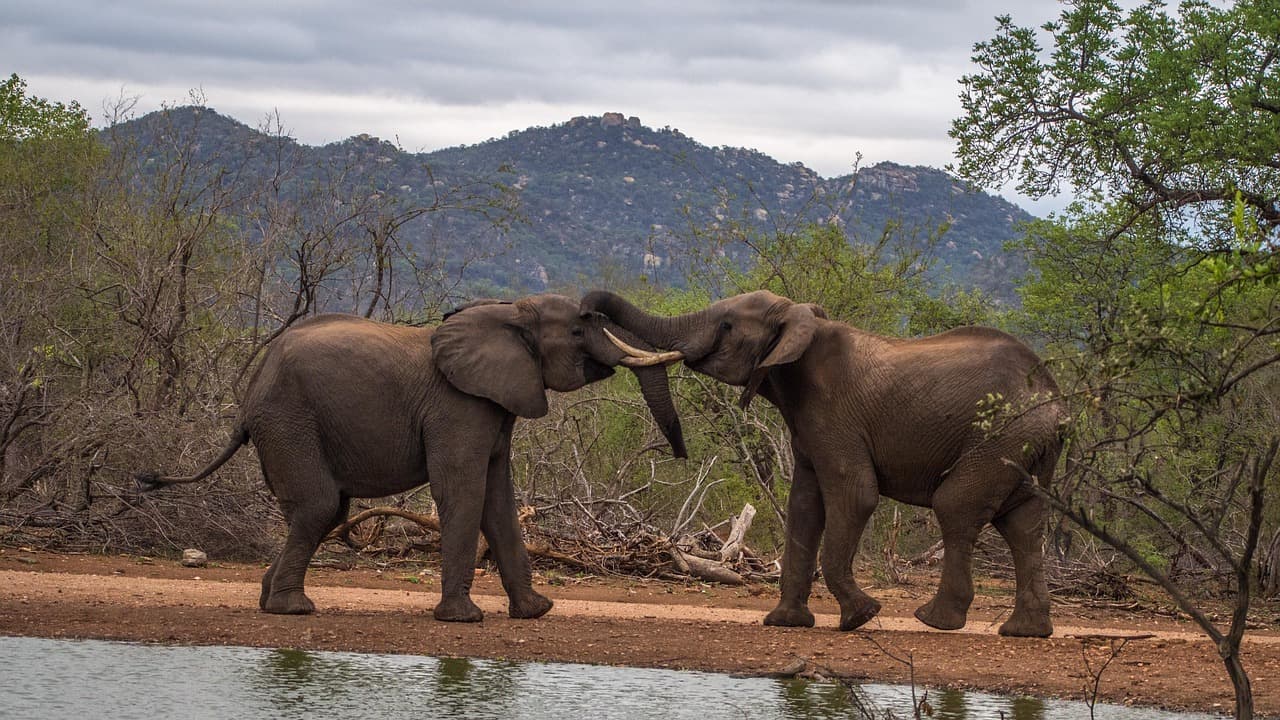
Elephants show excitement when reuniting with individuals they've bonded with, even after years of separation. Reunion ceremonies involve trumpeting, spinning, and intertwining trunks—behaviors reserved for recognized friends and family.
Threat Recognition
Perhaps most importantly for survival, elephants remember threats. In areas where poaching occurs, elephants develop wariness of humans that persists for generations. Researchers have documented populations that avoid areas where family members were killed decades earlier.
A fascinating 2007 study showed that elephants can distinguish between different human ethnic groups based on smell and clothing color. In regions where one group traditionally hunts elephants, elephants react defensively to that group's scent or clothing but remain calm around other groups—evidence of culturally transmitted threat memory.
Grief and Death Recognition
Elephants display profound responses to death, suggesting they remember and mourn deceased individuals. When encountering elephant bones or carcasses, they:
- Stop and investigate, touching bones gently with trunks
- Show particular interest in skulls and tusks
- Remain quiet and somber, ceasing normal vocalizations
- Sometimes carry bones away or cover bodies with vegetation
In Samburu National Reserve, Kenya, researchers documented a female elephant visiting the remains of her deceased mother repeatedly over several years, touching the bones each time—a behavior suggesting ongoing memory and emotional connection.
The Neuroscience of Elephant Memory
Several neurological features contribute to elephants' exceptional memory:
Temporal Lobe Size
Elephants have proportionally larger temporal lobes than humans. This brain region processes sensory input and is crucial for long-term memory formation.
Spindle Neurons
Elephants possess spindle neurons—specialized cells previously thought to exist only in great apes and humans. These neurons are associated with:
- Social cognition
- Empathy
- Self-awareness
- Rapid intuitive decision-making
Remarkably, elephants have three times more spindle neurons than humans, potentially explaining their sophisticated social memory and emotional depth.
Memory Transmission Across Generations
Elephant knowledge doesn't die with individuals—it's actively transmitted across generations through social learning. Young elephants learn from elders through:
- Direct instruction: Mothers actively teach calves about resources and dangers
- Observation: Calves watch and imitate elder behaviors
- Social tolerance: Adults allow young elephants to practice complex behaviors like water extraction
- Vocal learning: Calves learn the family's unique contact calls and can identify dozens of different calls
When Memory Becomes a Curse
Elephants' powerful memory can also cause problems in human-modified landscapes. Elephants remember:
- Historic crop raiding routes, even if only successful decades ago
- Locations of human settlements, leading to crop conflicts
- Historical range boundaries, causing them to enter areas now developed
Additionally, elephants that witness family members being killed by humans may develop PTSD-like symptoms, including hypervigilance, abnormal aggression, and disrupted social behaviors—evidence that traumatic memories persist and affect behavior.
Conservation Implications
Understanding elephant memory has profound conservation implications:
Why Culling Doesn't Work
Culling operations traumatize surviving elephants, who remember and transmit anti-human behaviors to offspring. This creates multi-generational conflict rather than solving population issues.
Translocation Challenges
Moving elephants to new areas is complicated by their memory. Elephants repeatedly attempt to return to their original home ranges, sometimes traveling hundreds of kilometers. Successful translocations often require moving entire family groups with their accumulated knowledge.
The Value of Elders
Protecting older elephants—particularly matriarchs—is crucial because they carry irreplaceable knowledge. Losing an elderly female isn't just losing one individual; it's losing decades of accumulated environmental and social knowledge that benefits the entire family.
As we continue to study elephant cognition, we gain not only scientific insights but also a deeper appreciation for these remarkable beings who, like us, build their lives on a foundation of memory, family, and learning.